
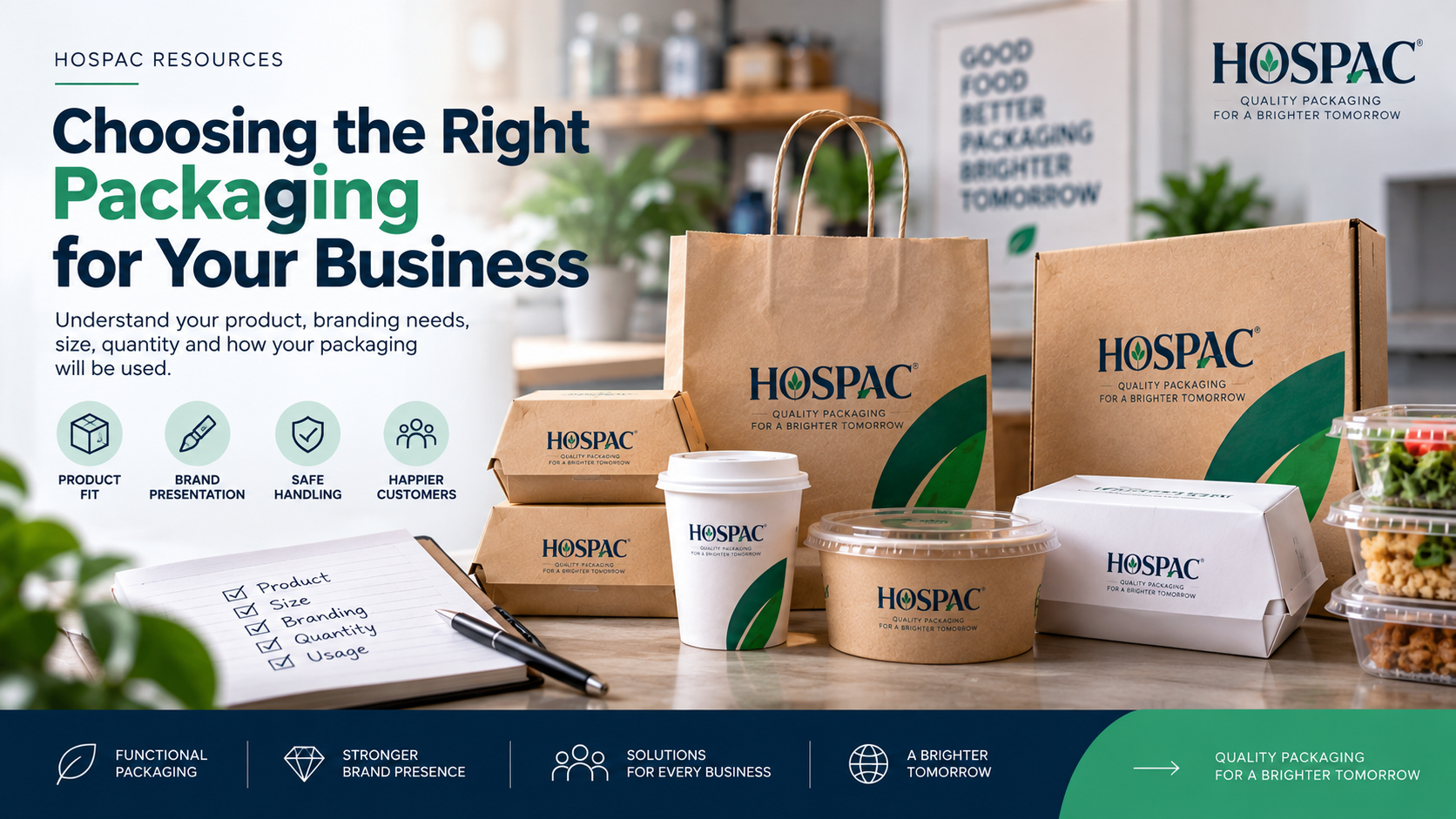
Good packaging should do more than hold a product. It should fit the product properly, support handling and presentation, and match the needs of the business. This guide explains the key things to consider before choosing or requesting packaging from HOSPAC.
Choosing the Right Packaging for Your Business
Packaging is an important part of how a product is stored, handled, presented and delivered to the customer. The right packaging should suit the product itself while also supporting the way your business operates.
Before choosing a packaging option, consider the following factors.
1. Start With the Product
The first question is simple: what are you packaging?
Different products require different packaging structures, sizes and formats. A burger, cake, beverage, takeaway meal or retail product will not necessarily use the same type of packaging.
Before making a decision, consider:
- What the product is
- Its approximate size
- How it will be placed inside the packaging
- Whether it will be carried, stacked or transported
- How the customer will receive and use it
Understanding the product first makes it easier to narrow down the right packaging option.
2. Choose the Right Size
Packaging that is too small may not hold the product properly, while packaging that is unnecessarily large may affect presentation and convenience.
Pay attention to:
- Product dimensions
- Portion size
- Number of items being packed
- Space required inside the packaging
- How the package will be stored or transported
HOSPAC products may be available in different sizes and specifications, depending on the product category.
3. Consider How the Packaging Will Be Used
Think beyond the point where the product is placed inside the package.
Ask yourself:
- Will customers carry it away?
- Will it be used for delivery?
- Will the packaging be stacked?
- Does the product need to remain presentable during transport?
- Does the customer need easy access to the product?
These questions can help determine the most suitable packaging format for your business.
4. Decide Between Standard and Custom Packaging
For some businesses, standard packaging may be enough.
For others, custom packaging can help create a more distinctive presentation.
HOSPAC produces standard packaging products and also works with businesses that require customised packaging.
Customisation may involve considerations such as:
- Branding
- Printed designs
- Packaging size
- Product format
- Quantity required
Where custom packaging is needed, the process can include understanding the customer’s requirements, design, sampling and production.
5. Think About Your Quantity
Before requesting packaging, determine approximately how many units your business requires.
Some packaging products or custom production jobs may have a Minimum Order Quantity (MOQ).
MOQ can vary depending on the type of product and the level of customisation required.
Providing an estimated quantity when requesting a quotation helps the HOSPAC team understand your requirement more clearly.
6. Consider Your Brand Presentation
Packaging is often one of the first physical things a customer sees when receiving a product.
For businesses that want branded packaging, consider:
- Your business name or logo
- Brand colours
- Printed information
- Overall presentation
- How the packaging fits your existing brand identity
The design should support the product without making the packaging unnecessarily complicated.
7. Ask for Guidance When You Are Unsure
You do not always need to know the exact packaging specification before making an enquiry.
You can provide information about:
- What you sell
- The type of packaging you currently use
- Your preferred size
- Estimated quantity
- Whether you need custom branding
- Any special requirement you have
HOSPAC can then help you identify suitable packaging options based on the information provided.
Choosing Your Next Packaging Option
The right packaging depends on the product, size, intended use, presentation and quantity required.
You can browse HOSPAC’s available packaging products to compare options, specifications and sizes before making an enquiry.